Powerful and Economical CO2 Lasers | Versatile Tools for Laser Marking

  • Highest marking quality
  • Inline-compatible for production lines
  • Low-maintenance & durable
     

Get advice now 

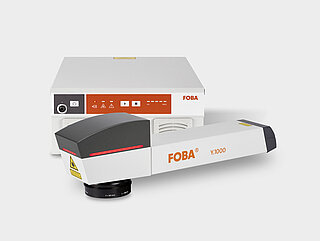
CO2 Laser Markers from FOBA

Maximum configurability for demanding laser marking applications

The C-Series CO2 lasers offer an exceptionally wide range of configuration options and can be precisely tailored to a wide variety of industrial marking requirements. Wavelengths ranging from 9.3 to 10.6 μm, variable marking head aperture and alignment, IP protection ratings, and various laser power levels ensure maximum flexibility during integration.

Technical parameters can be precisely tailored to material properties, line speeds, or existing system architectures, thereby ensuring maximum process reliability and repeatability.

Economical solution for static and dynamic laser marking processes

Whether for stationary product marking or continuous in-line marking, the C-Series CO2 lasers offer a cost-effective, low-maintenance, and long-term stable solution for industrial marking processes. Air-cooled systems, robust optics, and flexible interfaces ensure short setup times, low operating costs, and high system availability.

This makes the C-Series ideal for companies that want to optimize their production processes, ensure traceability, and achieve the highest marking quality at the same time.


What is a CO2 laser, and how does it work?

A CO2 laser is a gas-based marking laser that generates invisible infrared radiation with a typical wavelength of 9.3 to 10.6 micrometers. The active medium is a gas mixture of carbon dioxide (CO₂), nitrogen (N₂), and helium (He), which is excited by an electrical discharge. During this process, excited nitrogen molecules transfer their energy to the CO₂ molecules, which then emit laser radiation.

This wavelength is particularly well absorbed by non-metallic materials such as plastics, wood, or paper and is therefore ideally suited for precise, thermal material processing. The focused laser beam is guided through optical systems and scanner units, enabling marking, engraving, or material removal at high speed and with high repeatability. CO2 lasers are considered reliable, efficient, and low-maintenance, making them ideal for industrial applications with high demands on marking quality and process reliability. Typical areas of application include industrial processes in the packaging, electronics, medical, and automotive industries.

Download our product data sheet to learn more about our products!

Download

Find Your Perfect Marking Laser Now!

Use the FOBA product finder to discover which marking laser suits your application.

Start Productfinder

All the Benefits at a Glance Why should you choose a CO2 laser from FOBA?

  • Industrial-grade systems for maximum productivity

  • Energy efficiency: Low power consumption with high performance

  • Low maintenance: Long operating times without extensive upkeep

  • Durability: Robust components for continuous operation

  • Versatility: Suitable for plastics, resin, wood, glass, paper, cardboard, painted metals, and anodized aluminum

  • Integrated software solutions for easy operation

  • Global service, 24/7 self-service, remote support, and personalized assistance from our laser experts
     

Book a consultation now


Versatile Industry Applications

CO2 lasers are primarily used in the electronics and automotive industries, where precise, reliable, and cost-effective processing methods are required. They are ideal for marking, engraving, and processing non-metallic materials and meet the highest standards for quality and process reliability.

Electronics Industry

  • Industrial lasers optimized for the material-specific challenges of electronic components
  • High-precision, permanent marking with high contrast and high resolution, even at minimal sizes
  • Reliable marking process: fast and economical marking
  • Abrasion-resistant markings, even on challenging and sensitive plastics

Automotive Manufacturing

  • Durable markings that withstand extreme conditions, ensuring complete traceability
  • Reliable marking process: superior marking quality minimizes scrap and increases throughput
  • Optimized for short cycle times and reliable readability on plastic components
  • Easy integration and connection to production processes

Highest Marking Speeds for Production Environments Areas of Application

With marking speeds of up to 2,000 characters per second and line speeds of up to 900 m/min, the C-Series CO2 marking lasers are among the fastest systems in their class.
They enable razor-sharp marking of both simple and highly complex content—from DataMatrix codes and serial numbers to sophisticated graphics.

12 Show all images

Whether you are looking for comprehensive advice or already have specific ideas - we are here to help you! Let us advise you now!

Your projects are our top priority! Whether you have questions, would like personalized advice, or want to get started right away, our laser experts are here to help. Contact us today! Together, we’ll find the perfect solution for your needs.


We're happy to help: Get a no-obligation consultation now!


FAQ – Your Questions, Our Answers

What is a CO2 laser marker, and how does it work?

A CO2 laser marker is an industrial marking system that uses a carbon dioxide laser medium as its laser source. Electrical excitation of a CO2 gas mixture generates infrared laser light in the wavelength range of approximately 9.3–10.6 μm. This invisible infrared laser beam is focused onto the workpiece using lenses and mirrors, causing localized heating of the material’s surface. Depending on the material, the beam’s energy produces a wide variety of marking effects: vaporization or ablation of the surface (engraving), color change or foaming in plastics, and burning into organic materials. The result is permanent and precise markings (e.g., serial numbers, barcodes, 2D codes, logos) without the use of ink or other additives.

What materials can be marked with a CO2 laser?

CO2 lasers operate in the mid-infrared range and are particularly well-suited for all materials that strongly absorb this laser light. These include numerous non-metallic materials such as plastics (e.g., PE, PP, PET, PVC), resins, rubber, glass, ceramics, wood, paper, cardboard, leather, and other organic materials (such as textiles or food). Painted or coated surfaces can also be marked effectively—for example, CO2 lasers can mark painted metals and anodized aluminum efficiently and with high contrast. Uncoated (bare) metals, on the other hand, absorb very little CO2 laser light and therefore cannot be marked directly—or can only be marked inadequately—without special pretreatment.

What is the marking speed of a CO2 laser?

Modern CO₂ laser markers achieve very high marking speeds, making them ideal for high-throughput production lines. Depending on the laser power and optics, marking speeds of up to ~2,100 characters per second and line speeds of up to 900 meters per minute can be achieved. This allows clear codes and markings to be applied even on fast-moving production lines (“on-the-fly” marking) without interrupting production. In practice, the actual achievable speed depends on factors such as the material, marking content, desired depth/contrast, and laser power—however, CO2 lasers generally offer a very fast and efficient marking method.

At what wavelengths are CO2 lasers available?

Their wavelength lies in the infrared range between 9.3 and 10.6 μm.

Can CO2 laser markers also mark metals?

Yes, but only under certain conditions. Pure (polished) metals strongly reflect the CO2 laser beam in the 10.6-µm range, so direct marking on bare metal is generally not possible. However, a CO2 laser can be used to mark metals that have an absorbent surface - for example, dark-painted or anodized metal parts. In such cases, the laser vaporizes the top layer of paint or oxide, revealing contrasting lettering. For direct engraving on unpainted metal (e.g., steel or aluminum), on the other hand, fiber lasers are usually used, since metallic materials absorb the shorter wavelength of fiber lasers (~1.06 µm) much more effectively.

For which industries or applications are CO2 laser markers suitable?

CO2 marking lasers are used across various industries wherever non-metallic materials need to be marked. Key application areas include the automotive and supplier industries, medical technology (e.g., marking of devices and plastic housings), the electronics industry (marking of printed circuit boards and components), and the packaging and consumer goods industries. Typical applications include the permanent marking of plastics (switches, housings), marking of glass (beverage bottles, pharmaceutical containers), direct marking of packaging (cardboard boxes, films), and marking of organic materials (e.g., wood products, leather). Wherever fast, non-contact, and abrasion-resistant markings on such materials are required, CO2 lasers offer a proven solution.

How precise and consistent are CO2 laser markings?

CO2 laser markers produce high-resolution, razor-sharp markings, even with very small font sizes or intricate graphics. Thanks to precise beam focusing and high-quality optics, the markings remain clear and easily legible (e.g., machine-readable barcodes or DataMatrix codes). In addition, laser markings are generally extremely durable: they are abrasion-resistant and resistant to heat, chemicals, and uv light. This robustness makes CO2 laser markings ideal for use in demanding industrial environments where high-quality, long-lasting markings are required.

How can a CO2 laser marker be integrated into production?

CO2 laser markers are designed for seamless integration into manufacturing systems. They can be operated either as stationary units at a workstation or as part of production lines (e.g., on conveyor belts). Many CO2 lasers offer various beam guidance options (e.g., 0° or 90° beam exit) and interchangeable focusing lenses for marking fields of different sizes, allowing them to adapt to the layout of the facility. Through standard interfaces (e.g., Ethernet TCP/IP, digital I/O for triggering/control), they can be integrated into existing control systems. In addition, models with IP54 protection or, optionally, even IP65 protection are available—enabling use even in dusty or humid environments (e.g., in pharmaceutical, food, or beverage production).

How much maintenance is required, and are there any consumables?

CO2 marking lasers require very little maintenance. Modern systems use air-cooled CO2 laser tubes that operate with virtually no maintenance. Unlike many conventional marking methods, they do not require consumables such as ink, labels, or ribbons—only electricity and, if necessary, compressed air for cooling or purging. This keeps operating costs low and eliminates downtime for material changes. Overall, CO2 laser markers are designed for high reliability in everyday industrial use and have proven themselves over the years thanks to their low maintenance and operating costs.

What safety measures are required when operating a CO2 laser?

Industrial CO2 laser markers fall into Laser Class 4 because they emit high-energy, invisible infrared radiation that is hazardous to the eyes and skin. Therefore, strict safety measures must be followed. In practice, CO2 lasers are often operated inside enclosed laser safety enclosures or laser workstations (Laser Class 1) to protect operators from direct laser light. In addition, effective exhaust ventilation with suitable filters is necessary, as the laser process - particularly when marking plastics - can generate harmful vapors and fine dust particles. Users should comply with legal regulations (e.g., DIN EN 60825 for laser safety, occupational safety guidelines for air quality control) and employ trained personnel for operation and maintenance. When all safety measures are properly implemented and appropriate certified enclosures are used, the operation of a CO2 laser is safe and reliable.

How does a CO2 laser marker differ from a fiber laser?

The main difference lies in the laser beam source and the wavelength, which determine the suitability for different materials. CO2 lasers emit infrared light at ~10.6 μm, which is absorbed particularly well by organic and non-metallic materials (e.g., wood, paper, plastics, glass). Fiber lasers, on the other hand, generate laser light at 1064 nm and are therefore ideally suited for metals as well as many plastics containing laser-active additives. In practice, this means that CO2 lasers are primarily used for marking non-metals and coated materials - for example, in the packaging, electronics, automotive, and medical technology industries for plastics, glass, rubber, or coated surfaces. Fiber lasers, on the other hand, are the first choice for direct metal marking (steel, aluminum, precious metals, etc.) and are increasingly used in areas where deep marking or maximum precision on metal is required (e.g., medical technology, tool and machine manufacturing, aerospace, and the automotive industry).


Newsroom & Events

Get expert knowledge and the latest news on laser marking in our webinars, press releases and at our trade shows.

Don't miss any news


Let us advise you

Our sales and application engineers as well as our service technicians and project managers are close to you.

Send request