Fiber laser Fiber Laser | The universal Solution for your Laser Marking Needs

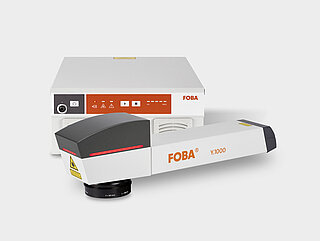
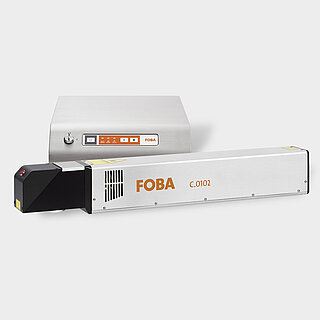
Fiber lasers are considered all-purpose lasers for marking industrial products and components—ideal for demanding applications in medical technology, the automotive industry, and the electronics industry.

Get advice now

Compact, flexible, powerful: our fiber laser solutions – as unique as your product

Rely on the highest quality in industrial product marking: FOBA fiber lasers stand for precise marking results, maximum speed, and easy integration into any production environment. With a broad portfolio of power classes and pulse widths, we offer tailor-made solutions for metals and plastics—from series production to complex applications.


Dynamic Multi-Level Marking

Mark complex workpieces without compromise: our technology automatically adapts to different height levels – precisely, quickly and reliably. With an industry-leading working range of up to 99 mm, you can mark multiple levels in a single pass. This means no repositioning, significantly shorter setup times, and maximum efficiency for demanding applications in series production.

Benefit from maximum process reliability thanks to integrated camera systems for image-based alignment and validation. This reduces scrap and increases the quality of your markings – even with complex geometries.

In the video, we show you a concrete example from practice – and how easy it is to realize demanding multi-level markings.


Benefits Quality without compromise

Fiber lasers are the first choice when it comes to versatile, precise, and economical laser marking. Our compact FOBA marking lasers offer you decisive advantages for your industrial marking needs—from series production to one-off production.

Highest marking quality at maximum speed

For high-contrast, permanently legible markings – ideal for traceability and quality assurance.


Flexibly adaptable to your requirements

Whether engraving, annealing, or color change – our marking lasers can be individually configured.


Robust technology for maximum availability

Air-cooled systems with durable mechanics ensure uninterrupted production processes.


Low maintenance and cost-effective

Minimal operating costs thanks to low energy consumption and reduced maintenance intervals.

Easy integration into your production line

Compact design and intuitive, user-friendly software enable quick commissioning—even in automated environments.


Precision at the highest level

The integrable camera system in the marking head allows you to secure your processes through automatic quality control.


Flexibility in labeling

Whether continuous serial numbers, plain text, barcodes, DataMatrix codes, QR codes, logos, or symbols: with their typical wavelength of 1064 nm, fiber lasers enable precise, permanent markings on a wide range of materials—especially metals and plastics, as used in the automotive, medical technology, and electronics industries.

Thanks to their excellent beam quality, fiber lasers achieve different marking effects depending on the material and parameter settings:

FOBA relies on ytterbium-doped fiber lasers, such as those used in the Y series. The ytterbium in the fiber laser serves as an active medium that amplifies the laser radiation and produces a particularly focused beam—ideal for razor-sharp, filigree, and reliably readable markings. This results in markings that meet the highest requirements for durability, legibility, and process reliability.


Fiber lasers in use Versatile solutions for materials and industries

Metal marking

Fiber lasers are ideal for marking metals such as stainless steel, aluminum, brass, or titanium. Whether annealing, engraving or color change, the markings are permanent, high-contrast and traceable. Reliable readability is crucial, especially in safety-critical areas such as medical technology or aviation.

Plastics processing

Many plastics can also be marked efficiently and precisely with fiber lasers. Depending on the composition of the material, color changes or foaming produce high-contrast markings—without any additives or pre-treatment. Ideal for serial numbers, logos, or DataMatrix codes.


Medical devices

In medical technology, permanent, biocompatible, and traceable markings are mandatory. FOBA fiber lasers enable UDI-compliant markings on surgical instruments, implants, and housings—with maximum precision and validatable processes.


Automotive industry

Speed, process reliability, and traceability are key factors in the automotive industry. Fiber lasers mark components such as engine parts, transmission parts, and plastic trim efficiently and permanently—even for large quantities and complex geometries.


8 Show all images

Find the right marking laser now!

Use our product finder to discover which marking laser is right for your application.

Product finder


Discover fiber lasers now! Simple. Precise. FOBA.

Purchasing a fiber laser is an investment in quality, efficiency, and future-proofing. To ensure that your marking solution is optimally suited to your requirements, you should consider the following criteria when making your selection:

Performance classes: The right power for every application

Fiber lasers are available in various power classes – typically between 20 and 100 watts. You can select the appropriate power depending on the material, marking depth, and production speed. FOBA offers you a wide range of products for fine engraving to fast series marking.


Cooling: Air-cooled for maximum availability

Cooling is a decisive factor for operational safety. FOBA relies on air-cooled fiber lasers that do not require external cooling devices. This reduces maintenance requirements and ensures long system availability—even in continuous operation.


Software solutions – intuitive and efficient

FOBA makes marking easy: Our intuitive software solutions such as MarkUS and FOBA GO enable quick setup, easy operation, and seamless integration into your production environment. This saves you time and reduces complexity—for maximum productivity.


Vision systems – for perfect marking results

Thanks to the integrated vision systems, alignment and validation are performed automatically. This means perfect marking results, less waste, and maximum process reliability—without any manual readjustment.


Integration into production lines: Compact and flexible

FOBA fiber lasers can be easily integrated into existing machines and production lines. Thanks to their compact design, flexible mounting options, and the world's smallest marking head, TITUS™, our systems are ideal for space-critical applications and automated processes.


Service & Partnership: Trust in expertise and support

When purchasing a fiber laser, it's not just the technology that counts—it's also the service and having a reliable partner at your side. FOBA stands for decades of expertise in industrial marking, comprehensive services, training, and personal consultation. We accompany you from the selection process to successful commissioning—and remain your point of contact even after that.


Interesting facts

Our white papers, application notes, case studies, and webinars offer comprehensive and detailed analyses of the latest technologies. You will gain valuable insights into the advantages and challenges of laser marking, including practical application examples and success stories from the industry.

Download White Papers, Application Notes & Case Studies

Discover our white papers, application notes, and case studies!

Would you like to gain deeper insights into current trends and proven laser marking processes? Our documents offer valuable information and practical examples to help you make informed decisions and optimize your strategies.

Laser marking of plastics
Plastic processing by laser marking

Discover now

Records Webinars

Get to know us in our webinars!

Are you ready to expand your knowledge and learn new skills? Our webinars offer you the perfect opportunity to do so! Immerse yourself in exciting topics and learn from our experts.

Purchasing a laser marking system – basics, questions, limitations, and what you should consider


Watch webinars

FAQ - Your questions, our answers

Which materials are suitable for fiber lasers?

Fiber lasers are particularly versatile and are ideal for marking metals (e.g., stainless steel, aluminum, copper, titanium) and plastics (e.g., ABS, PA, PEEK). Ceramics, coated surfaces, and some composite materials can also be marked precisely and permanently.

What is the wavelength of a fiber laser?

A typical fiber laser operates at a wavelength of 1064 nm—ideal for absorption in metals and many engineering plastics. This wavelength enables high-contrast, fine, and durable markings.

What is the difference between fiber lasers and CO2 lasers?

The main difference lies in the wavelength and the area of application:

  • Fiber lasers (1064 nm) are ideal for metals and engineering plastics.
  • CO2 lasers (10,600 nm) are better suited for organic materials such as wood, paper, glass, or some plastics.

Fiber lasers also offer higher marking speeds, lower operating costs, and a more compact design—ideal for industrial applications.

How long does a fiber laser last?

FOBA fiber lasers are designed for a long service life. The laser source typically achieves over 100,000 operating hours—low maintenance and reliable, even in continuous operation.

Which materials can be labeled?

In addition to metals and plastics, coated surfaces, ceramics, films, and some composite materials can also be marked. The marking effects range from annealing marking to engraving and color change, depending on the material and parameter settings.

Whether you would like comprehensive advice or already have specific ideas in mind, we are here to help you! Get advice now!


Newsroom & Events

Get expert knowledge and the latest news on laser marking in our webinars, press releases and at our trade shows.

Don't miss any news


Let us advise you

Our sales and application engineers as well as our service technicians and project managers are close to you.

Send request