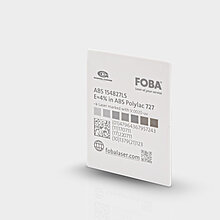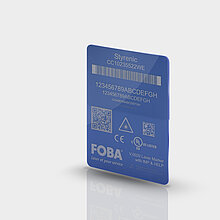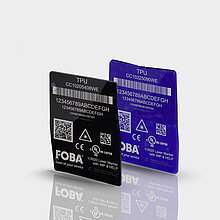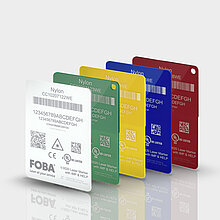
Laser Marking Systems for Direct Part Marking
UV Laser Markers
Precise. Rich in Contrast. Sustainable.
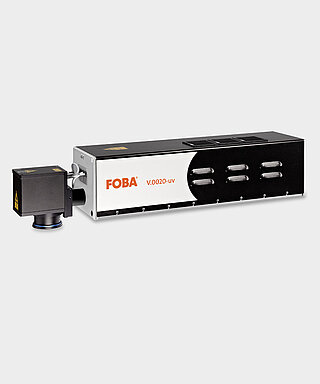
Ultraviolet laser markers with Nd:YVO4 technology are the ideal solution for high-precision laser marking of sensitive materials. Thanks to their ultraviolet wavelength of 355 nm, they enable contactless, high-contrast marking that is gentle on the material - without any thermal stress.
Are you interested in having your product tested by our application experts? Then get in touch with us!
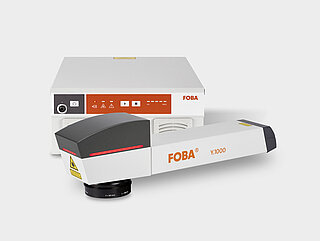
The FOBA V-Series - UV and Green Lasers for Modern Plastic Markings
The new FOBA V-Series stands for compact design, flexible integration and excellent marking quality. Developed for industrial series production, it is perfect for marking plastics such as HDPE, PVC, PP and PA66.
Photochemical Eeaction vs. Thermal Processes How does UV Laser Marking work?
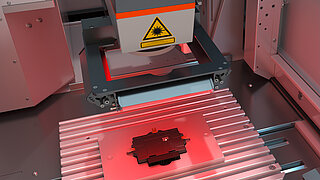
UV Laser Marking is based on a high-precision process that is characterized by its particularly gentle effect on sensitive materials. In contrast to conventional laser marking processes that work with heat, the UV laser uses a so-called photochemical reaction - also known as "cold marking".
Photochemical Reaction (UV Laser)
UV Lasers with a wavelength of 355 nm directly excite the molecules on the surface of the material. This changes the structure of the material without generating any significant heat. This "cold" marking ensures fine, high-contrast and permanent markings without damaging the material.
Thermal Processes (e.g. CO2 or fiber lasers)
The material is melted, vaporized or discolored by the effect of heat. This can lead to melting marks, deformation or material weakening in heat-sensitive materials such as PVC, silicone or white polyamides.
UV Lasers in Industry - Precision That Sets Standards
UV Lasers with a wavelength of 355 nm are considered a high-end solution for industrial marking and micromachining. They enable contactless, gentle and high-precision processing that sets new quality standards in many industries.
Experience the precision of UV Laser technology - contact us for an individual consultation.
Get advice now!
Why UV Lasers? The Advantages at a Glance
1. Cold marking through photochemical reaction
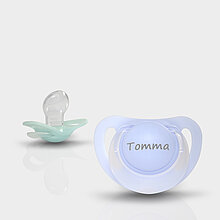
In contrast to CO2 or Fiber Lasers, which work with thermal energy, UV Lasers generate markings through a photochemical reaction. This means: no melting, no deformation, no material damage - ideal for sensitive materials such as silicones, white polyamides, glass or medical plastics.
2. Maximum precision for the finest structures
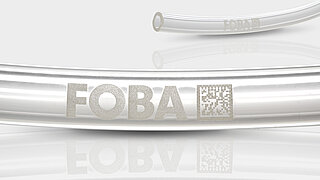
Thanks to their short wavelength, UV Lasers enable extremely fine, high-contrast markings - even on the smallest surfaces. Whether DataMatrix codes, serial numbers or logos: The markings are razor-sharp and permanently legible.
3. Versatile in use
UV Lasers are suitable for a wide range of materials:
Plastics (also flame-retardant or without additives)
Glass & ceramics
Medical products
Electronic components
Packaging & labels
4. Hygienic & biocompatible
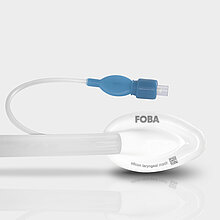
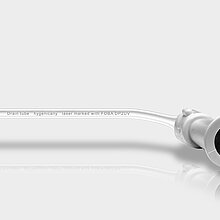
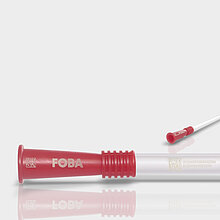
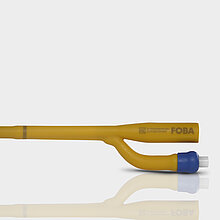
The virtually intact surface after marking makes UV Lasers zur ersten Wahl in der medical technology. The markings can be sterilized, are abrasion-resistant and biocompatible - perfect for catheters, insulin pumps or surgical instruments.
5. Process reliability & efficiency
Integrated camera systems enable automatic component recognition, marking alignment and quality control. This reduces rejects and ensures maximum process reliability in series production.
6. Sustainability & economic efficiency
UV Lasers work without consumables such as ink or labels. They are energy-efficient, low-maintenance and reduce the ecological footprint - a real plus point for sustainable production processes.
UV Laser Marking
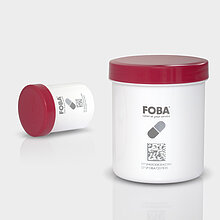
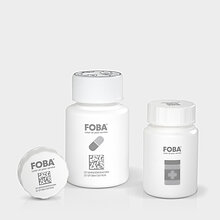
UV Laser Marking is ideal for the gentle and high-contrast marking of sensitive materials such as ceramics, flame-retardant or biocompatible plastics. It is used wherever maximum precision is required - for example in automotive and aircraft construction, medical technology, electronics or extrusion processes. Thanks to its short wavelength, UV technology enables permanent markings without thermal stress and meets the highest requirements for legibility, traceability and material integrity.
UV, Fiber or CO2 Laser? The Big Comparison for Your Application
Choosing the right laser marking system is crucial for the quality, efficiency and sustainability of your marking processes. Whether for metals, plastics or organic materials – each laser source has its own specific strengths. Here you can find out which laser type is best suited to your material and your application.
Ultraviolet Laser - Precision without heat
Wavelength: 355 nm
Technology: „Cold marking“ by photochemical reaction
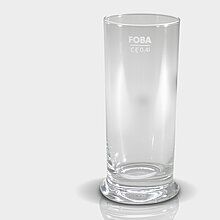
Ideal for: Glass, sensitive plastics (e.g. LDPE, HDPE, silicones), medical packaging, electronics
UV lasers work with ultraviolet light and create markings through photochemical processes - without any thermal stress. This means that even the most sensitive surfaces remain intact. They are ideal for applications where hygiene, biocompatibility and maximum precision are particularly important.
Advantages:
- No material deformation
- Highest contrast sharpness
- Ideal for micro-marking and traceability
- Particularly suitable for medical technology and the electronics industry
Fiber Lasers - Fast, robust and versatile
Wavelength: 1,060 - 1,070 nm
Technology: Diode-pumped solid-state lasers
Ideal for: Metals, hard plastics, engineering plastics
Fiber lasers are the first choice for industrial metal marking. They offer high marking speed, long service life and low operating costs. They are also suitable for certain plastics.
Advantages:
- Extremely durable and low maintenance
- High marking speed
- Ideal for serial numbers, UDI codes, logos
- Perfect for automotive, aviation and mechanical engineering
CO2 Laser - The Classic for Organic Materials
Wavelength: 9,300 - 10,600 nm
Technology: Gas laser with high power
Ideal for: Paper, wood, cardboard, glass, PET, labels
CO2 lasers are particularly suitable for marking organic materials and packaging. They work thermally and create markings by removing material or changing color.
Advantages:
- Ideal for the packaging industry
- High cutting quality for organic materials
- Versatile use for engraving and marking
Product finder
Looking for a marking solution?
Find out now which laser is right for your application.
Worth Knowing
Our white papers, application notes, case studies and webinars offer comprehensive and detailed analyses of the latest technologies. You will gain valuable insights into the benefits and challenges of laser marking, including practical application examples and success stories from the industry.
Download White Papers, Application Notes & Case Studies
Discover our white papers, application notes and case studies!
Would you like to gain deeper insights into current trends and proven laser marking processes? Our documents provide you with valuable information and practical examples to help you make informed decisions and optimize your strategies.
Laser marking of plastics
Plastic processing by laser marking
Mark Colored Plastics
Records Webinars
Discover our webinars!
Are you ready to expand your knowledge and learn new skills? Our webinars offer you the perfect opportunity to do so! Immerse yourself in exciting topics and learn from our experts.
Live demo - FOBA's UV laser in action: Marking colored plastics
Watch webinars
For whom is a UV Laser Marker worthwhile?
A UV Laser Marker is worthwhile for anyone who wants to achieve high-contrast markings on highly sensitive products.
If your products are sensitive, your processes demanding and your quality standards high, the UV Laser is the right choice. FOBA not only offers you the right technology, but also comprehensive advice, integration and service – for a marking solution that grows with your requirements.
For more information, please contact us using our contact form.
We look forward to your inquiry!
FAQ
A UV Laser is an industrial marking laser with a wavelength of 355 nm. It works in the ultraviolet spectrum and creates markings through a photochemical reaction - without any thermal stress. The result: razor-sharp, permanent markings that are gentle on materials.
UV Lasers are ideal when maximum precision with minimum heat input is required - e.g. when marking sensitive plastics, glass, ceramics or medical products.
UV stands for "ultraviolet" - a region of the light spectrum with a particularly short wavelength. This property enables so-called "cold marking", in which the material is not thermally stressed.
Medical technology: catheters, insulin pumps, surgical instruments
Electronics: printed circuit boards, connectors, sensors
Automotive & aviation: cables, hoses, flame-retardant plastics
Packaging & consumer goods: plastic packaging, labels, glass containers
Silicones, white polyamides
HDPE, PP, PVC
Glas, Ceramic
Flame-retardant and medical plastics
UV Lasers mark by photochemical reaction ("cold"), fiber and CO2 lasers by thermal processes ("hot"). UV Lasers are ideal for sensitive materials, Fiber Lasers for metals and CO2 Lasers for organic materials such as paper or wood. Here is another comparison.
Thanks to the small spot diameter and short pulse duration, UV Lasers achieve an extremely high resolution - ideal for micro-marking, DataMatrix codes and intricate logos.
The marking is superficial - a few micrometers deep. This protects the material and preserves its structural properties.
Yes - UV Lasers enable high-contrast, permanent markings on plastics - without any additives or solvents.
Yes, UV Lasers produce splinter-free, precise markings on glass and ceramics - ideal for medical packaging, sensors or technical components.
No thermal load
Highest precision
Additive-free, environmentally friendly marking
Biocompatibility & sterility
Abrasion-resistant & durable
Process-safe & automatable
The comparison at a glance.
Although UV Lasers are more expensive to purchase and require more maintenance, they offer the highest marking quality for sensitive applications. Thanks to their durability and the absence of consumables, they are a sustainable investment that pays off in the long term.
UV markings are abrasion-resistant, chemical-resistant and sterilizable - ideal for products with long life cycles or multiple reprocessing.
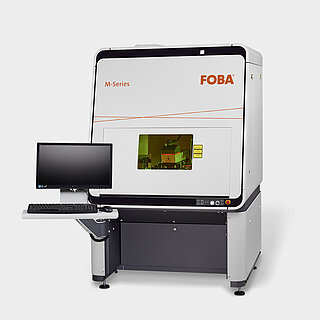
UV Lasers belong to laser class 4 - therefore strict safety regulations such as laser safety goggles, shielding and access controls apply. FOBA supports you with safe and standard-compliant commissioning, including IQ, OQ, PQ and MQ, so that your systems meet the high requirements of medical technology. We also offer training courses for laser safety officers (specialist responsible for laser safety according to OStrV). If the UV Laser is integrated into an M-series laser workstation, the entire system is classified as laser class 1 - for maximum safety during operation.
In Germany, these include EN 60825-1, DGUV Regulation 11 and the Ordinance on Industrial Safety and Health (BetrSichV). FOBA offers comprehensive support with documentation, training and machine qualification.