 Laser Marking +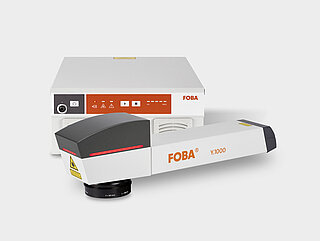
![[Translate to English:]](/fileadmin/_processed_/6/8/csm_M2000-shad-long-smaller_721f1235f0.jpg "[Translate to English:]")
![[Translate to English:]](/fileadmin/_processed_/6/4/csm_page-teaser-cases-1500x3000pxl_01_5d7916f355.jpg "[Translate to English:]")
![[Translate to English:]](/fileadmin/_processed_/7/f/csm_page-teaser-blog-1500x3000pxl_d26096fc1e.jpg "[Translate to English:]")
![[Translate to English:]](/fileadmin/_processed_/8/1/csm_page-teaser-service-1500x3000pxl_01_3be9f7cec6.jpg "[Translate to English:]")
![[Translate to English:]](/fileadmin/_processed_/c/1/csm_page-teaser-karriere-1500x3000pxl_f91a4c1099.jpg "[Translate to English:]")
Laser Marking System Fiber Laser Marker
Fiber laser markers are the lasers of choice when it comes to marking and engraving a variety of materials (plastics, metals). Fiber laser marking systems offer high marking speeds, high-quality marking results and are cost-efficient. The compact fiber laser markers can be easily integrated into lines, machines and systems and offer flexible options for automation solutions.


Marking with fiber laser markers
Fiber lasers for direct part marking (DPM)
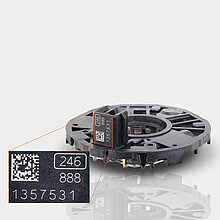
The fiber laser is considered as the "all-rounder" for marking industrial parts and products, as it is well absorbed by many materials. With its typical wavelength of 1064 nm, fiber laser markers are ideally suited for marking metals and a variety of plastics used in automotive and electronics industry as well as in medical technology.
Depending on the material and parameters, fiber lasers achieve different marking effects: They are used for annealing and color change/frothing as well as for color/material removal.
In a ytterbium fiber laser (such as the Y-Series laser markers), the ytterbium in the fiber acts as a dopant to achieve the required optical qualities by amplifying the light beam. This creates a highly focused laser beam that is ideal for achieving durable, pin-sharp, particularly filigree and reliably readable markings.
Benefits
Due to their broad application range, fiber laser markers are a wide spread solution for direct part marking in many industries. The excellent beam quality enables best marking quality at high marking speeds. Our compact fiber lasers offer decisive advantages for marking your products:
- High-quality, fast markings with optimum legibility for reliable traceability
- Flexibility and customization for your requirements
- Mechanically rugged, air-cooled technology ensures high uptime
- Low-maintenance, low consumption costs
- Easy and seamless integration
- Reliability and efficiency provide process optimization
- Zero-defect quality due to the laser-integrated vision system
Application examples for fiber laser markers
- Reliable marking of plastics, epoxy resin, foils, e.g. from electronics and automotive industries
- High-contrast markings, such as black markings on aluminum
- Marking of anodized aluminum and various metals (nickel alloys, steels, titanium, etc.)
- Paint removal, for example for day/night design
- Dark, smooth markings on various metals, e.g. annealing on stainless steel



![[Translate to English:] Laserbeschrifteter Bremssattel, links: schwarz-weiß Markierung](/fileadmin/_processed_/a/4/csm_Bremssattel-Y.1000_dfc441b785.jpg "Laser marked brake caliper, left: black and white marking")

FOBA Fiber Laser Markers
High speed, maximum precision and easy integration: our broad portfolio of fibre laser markers includes various power classes and pulse widths. The flexible fibre lasers offer tailor-made solutions for high-quality markings that meet the industry's needs. The integrated vision system minimizes scrap rates and provides process reliability through verification steps before and after laser marking. If space is limited in your manufacturing environment, then TITUS™, the smallest laser marking head in the world, will be your game changer with its unmatched flexibility and its extremely small size.
Is a fiber laser the optimum solution for your requirements?
- Are you looking for a solution to reliably mark your metal or plastic parts?
- Do you need a high-quality marking at maximum speed?
- Do you require precisely marked components in zero-defect quality?
- Are you looking for a highly efficient marking solution?
If your answer is "yes" to any of these questions, a FOBA fiber laser marker could be the right solution for you. We will be happy to advise you which laser will achieve the best marking results for your requirements.
![[Translate to English:]](/fileadmin/_processed_/3/f/csm_Titus-shad-long-smaller_5d37c6c4a7.jpg "[Translate to English:]")
FOBA Titus™
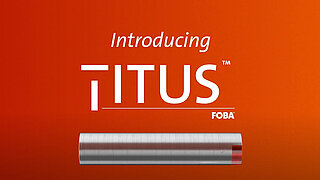
Titus™ is the smallest, lightest and easiest to integrate laser marking head in the world.
Learn more about TITUS™
![[Translate to English:]](/fileadmin/_processed_/6/c/csm_Y.0100-MU-SU-shad-long-smaller_88512fb0e5.jpg "[Translate to English:]")
Y.0XXX-Series
High-performance fiber laser markers for industrial part marking
Learn more
![[Translate to English:]](/fileadmin/_processed_/6/a/csm_Y0201-DN-MU-SU-IMP_HG_42762bacd0.png "Y0201-DN-MU-SU-IMP | FOBA Laser Marketing")
Y.0201-DN
The latest technology for backlit components: The standard for high-precision paint removal in day-night design
Learn more
![[Translate to English:]](/fileadmin/_processed_/a/7/csm_Y.1000-MU-SU-shad-long-smaller_ace022c814.jpg "[Translate to English:]")
Y.1000
Ultra-fast 100W fiber laser marker for high-contrast markings on robust materials
Learn more
![[Translate to English:]](/fileadmin/_processed_/1/6/csm_Y.0200-S-SHF100-SHF60-SU-long-smaller_9f1f38e16f.jpg "[Translate to English:]")
Y.0200-S
Powerful, versatile fiber laser marker with high uptime
Learn more

Get in touch with us
Our sales and application engineers as well as our service technicians and project managers are close to you, wherever you are.
Make Appointment Now

Find Your Perfect Marking Laser Now!
Use the FOBA product finder to discover which marking laser suits your application.
FOBA Titus™: The most innovative fiber laser marker


![[Translate to English:] UV-Laserbeschrifter V.0200-uv](/fileadmin/_processed_/4/f/csm_FOBA_V.0042-uv_small_horizontal_1088x2176_cfe45e188e.jpg "UV Laser Markers")